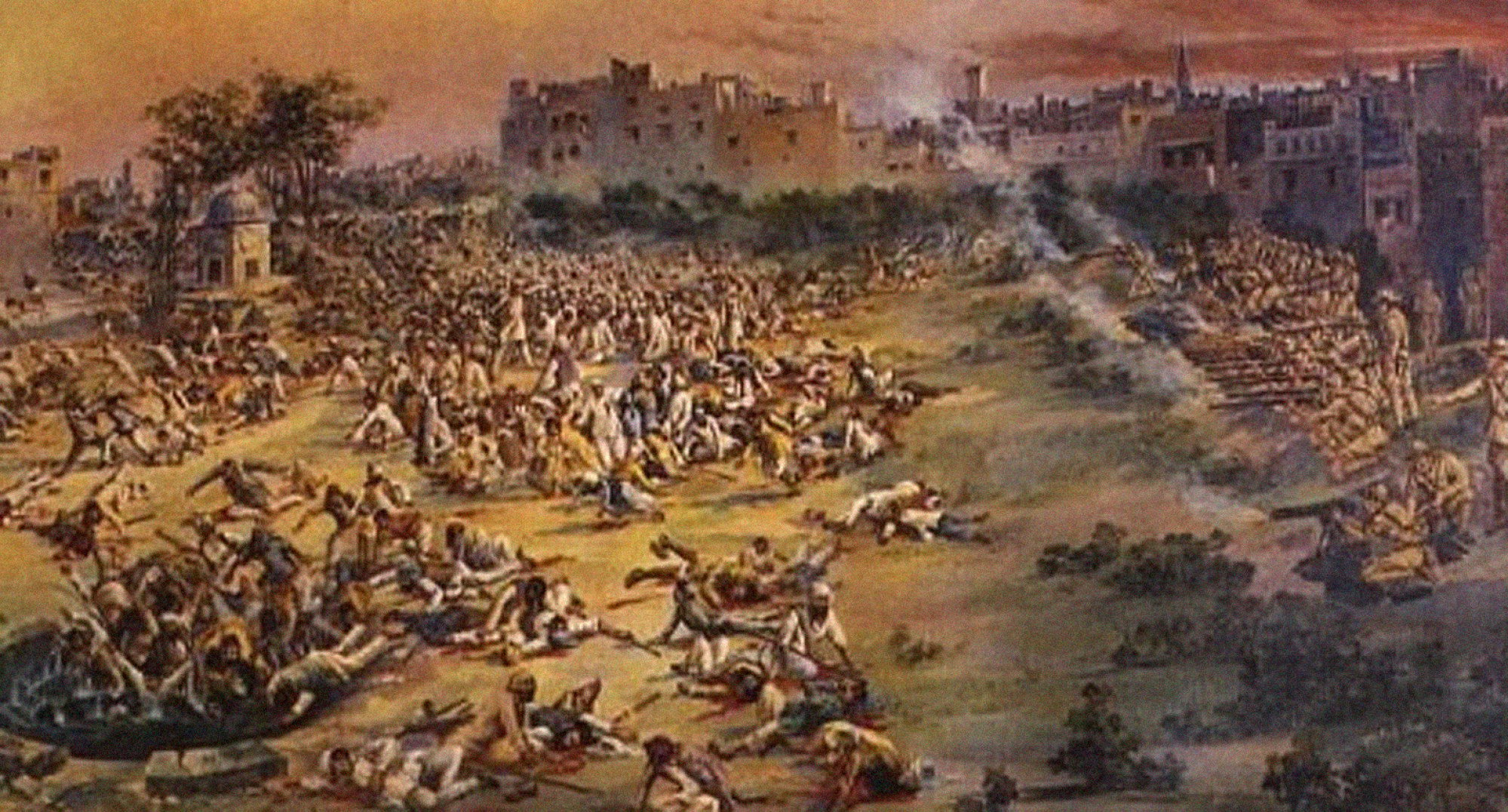
Amritsar massacre,n.d., Gandhi before India.
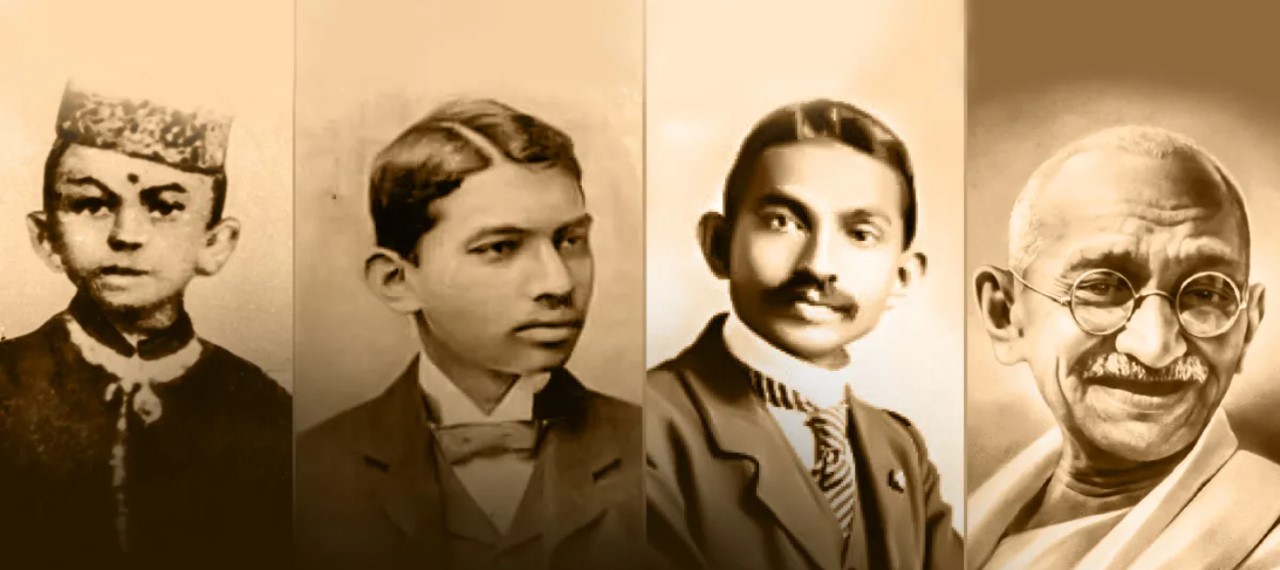
Gandhi returned to India in 1915. He joined the Indian National Congress and was introduced to Indian issues and politics. He took leadership of the Congress in 1920 and began escalating demands to the British.
"Whenever you are confronted with an opponent, conquer him with love…Nonviolence is a weapon of the strong…Strength does not come from physical capacity. It comes from an indomitable will. Complete independence will be complete only to the extent of our approach in practice to truth and nonviolence. Independence of my conception means nothing less than the realization of the “Kingdom of God” within you and on this earth. Complete independence through truth and nonviolence means the independence of every unit, be it the humblest of the nation, without distinction of race, color or creed."
~ Mahatma Gandhi
Amritsar massacre,n.d., Gandhi before India.
On April 13th, 1919, a crowd of peaceful protesters gathered in the Jallianwala Bagh garden in Amritsar. Police instructed them to disperse, but the protesters refused to move. The army then fired on the crowd for 10 minutes and killed about 400 citizens and wounded over one thousand. General Dyer of the British Army who was in charge felt it was his duty to his country to slaughter the Indians. The massacre led Gandhi to push vigorously for Indian independence.
"Victory attained by violence is tantamount to a defeat, for it is momentary. Just as one must learn the art of killing in the training for violence, so one must learn the art of dying in the training for nonviolence. Better than cowardice is killing and being killed in battle. If blood be shed, let it be our own. Let us cultivate the calm courage to die without killing."
~ Mahatma Gandhi
Gandhi encouraged Indians to boycott British educational institutions, resign from government jobs, not use British courts, and give up British honors and titles. He led national protests around the country. He asked Indians to spin their own cloth to avoid purchasing textiles made in Britain. The goal of the non-cooperation movement was to resist British rule in any way possible.
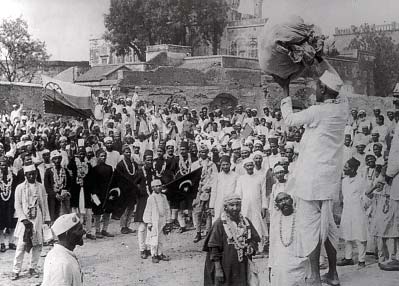
Clothes being collected to be burnt as a part of the Non-cooperation movement,1922, Gandhi before India.
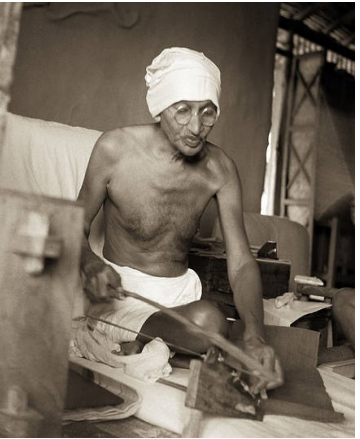
Gandhi spinning cloth,n.d., Gandhi Heritage Portal.
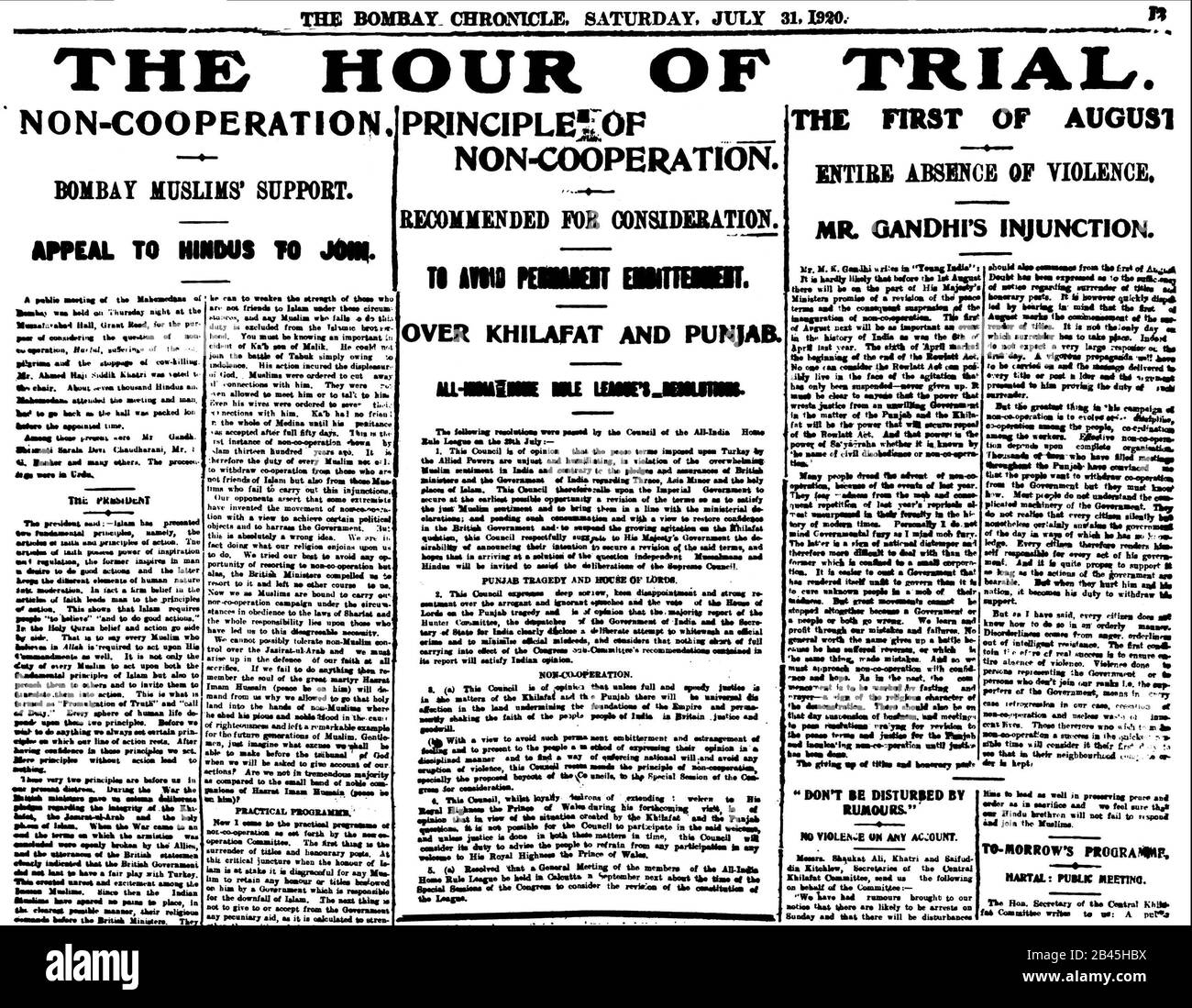
Mahatma Gandhi freedom struggle news in The Bombay Chronicle newspaper, 31 July 1920, MKGandhi.